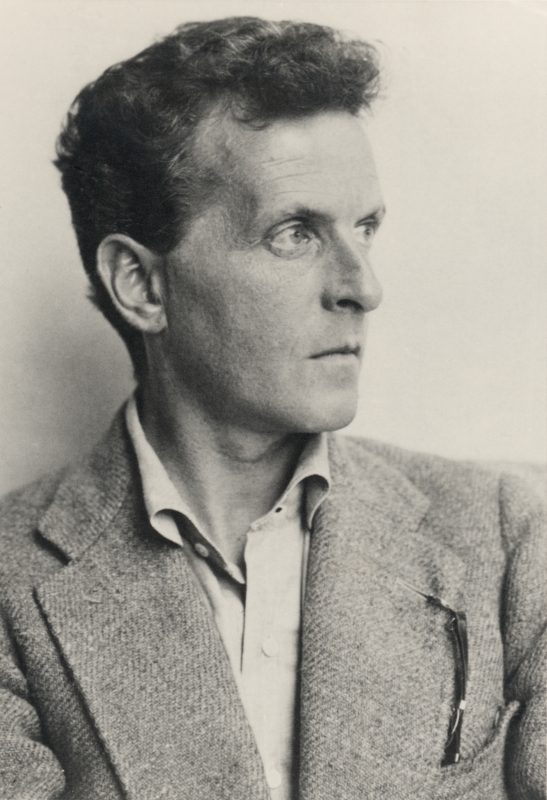
Werk

Tractatus Logico-Philosophicus
Ludwig Wittgenstein
Philosophische Untersuchungen
Ludwig WittgensteinTractatus Logico-Philosophicus
Ludwig WittgensteinPhilosophische Untersuchungen
Ludwig WittgensteinLudwig Wittgenstein Berühmte Zitate
Ludwig Wittgenstein buch Philosophische Untersuchungen
§103, Seite 50.
Philosophische Untersuchungen (Philosophical Investigations)
„Die Grenzen meiner Sprache bedeuten die Grenzen meiner Welt.“
Ludwig Wittgenstein buch Tractatus Logico-Philosophicus
Satz 5.6
Logisch-Philosophische Abhandlung (Tractatus logico-philosophicus)
Ludwig Wittgenstein buch Tractatus Logico-Philosophicus
Tractatus Logico-Philosophicus
Variante: Der Tod ist kein Ereignis des Lebens. Den Tod erlebt man nicht.
Wenn man unter Ewigkeit nicht unendliche Zeitdauer, sondern Unzeitlichkeit versteht, dann lebt der ewig, der in der Gegenwart lebt.
Unser Leben ist ebenso endlos, wie unser Gesichtsfeld grenzenlos ist.
„6.41 Der Sinn der Welt muss ausserhalb ihrer liegen.“
Ludwig Wittgenstein buch Tractatus Logico-Philosophicus
Tractatus Logico-Philosophicus
Zitate über die Welt von Ludwig Wittgenstein
„Nicht wie die Welt ist, ist das Mystische, sondern daß sie ist.“
Ludwig Wittgenstein buch Tractatus Logico-Philosophicus
Satz 6.44
Logisch-Philosophische Abhandlung (Tractatus logico-philosophicus)
„Die Welt ist alles, was der Fall ist.“
Ludwig Wittgenstein buch Tractatus Logico-Philosophicus
Quelle: Satz 1, Logisch-Philosophische Abhandlung (Tractatus logico-philosophicus)
Ludwig Wittgenstein buch Tractatus Logico-Philosophicus
Quelle: Tractatus Logico-Philosophicus, Satz 5.641
Tagebücher 1914-1916. Eintrag 2.8.1916. in: Werkausgabe Band 1. Suhrkamp, Frankfurt a.M. 1984, Seite 174.
Tagebücher 1914-1916
Ludwig Wittgenstein Zitate und Sprüche

„Wovon man nicht sprechen kann, darüber muß man schweigen.“
Ludwig Wittgenstein buch Tractatus Logico-Philosophicus
Satz 7
Logisch-Philosophische Abhandlung (Tractatus logico-philosophicus)
Variante: Wovon man nicht sprechen kann, darüber muss man schweigen.
Quelle: Tractatus Logico-Philosophicus
Quelle: Logisch-Philosophische Abhandlung (Tractatus logico-philosophicus), Satz 6.52
„Ehrgeiz ist der Tod des Denkens.“
VB 560 (1948), vgl. http://books.google.de/books?hl=de&id=5vfWAAAAMAAJ&q=ehrgeiz books.google
Vermischte Bemerkungen (Culture and Value)
„Der Philosoph behandelt eine Frage; wie eine Krankheit.“
Ludwig Wittgenstein buch Philosophische Untersuchungen
Teil I, §255, Seite 98.
Philosophische Untersuchungen (Philosophical Investigations)
1.11.14, Notebooks 1914-1916. Edited by G.H. von Wright and G.E.M. Anscombe
Tagebücher 1914-1916
Ludwig Wittgenstein buch Philosophische Untersuchungen
Quelle: §109, Seite 52., Philosophische Untersuchungen (Philosophical Investigations)
Ludwig Wittgenstein buch Philosophische Untersuchungen
§593, Seite 164.
Philosophische Untersuchungen (Philosophical Investigations)
Culture and Value

Ludwig Wittgenstein buch Tractatus Logico-Philosophicus
Quelle: Satz 4.116, Logisch-Philosophische Abhandlung (Tractatus logico-philosophicus)
„Ein philosophisches Problem hat die Form: »Ich kenne mich nicht aus.«“
Ludwig Wittgenstein buch Philosophische Untersuchungen
§123, Seite 55.
Philosophische Untersuchungen (Philosophical Investigations)
„Das Subjekt gehört nicht zur Welt, sondern ist eine Grenze der Welt.“
Ludwig Wittgenstein buch Tractatus Logico-Philosophicus
Quelle: Logisch-Philosophische Abhandlung (Tractatus logico-philosophicus), Satz 5.632
(1946), Vermischte Bemerkungen - Eine Auswahl aus dem Nachlaß, Georg Henrik von Wright (Hrsg.), Suhrkamp, Frankfurt a.M. 1978. S. 103 http://books.google.de/books?hl=de&id=5vfWAAAAMAAJ&q=esperanto <br class="br">Vermischte Bemerkungen (Culture and Value)
„Die Tragödie besteht darin, daß sich der Baum nicht biegt, sondern bricht.“
(1929), Vermischte Bemerkungen - Eine Auswahl aus dem Nachlaß, G. H. von Wright (Hrsg.), Suhrkamp, Frankfurt a.M., 1978. S. 12 http://books.google.de/books?id=5vfWAAAAMAAJ&dq=biegt <br class="br">Vermischte Bemerkungen (Culture and Value)
„Wir kämpfen mit der Sprache. Wir stehen im Kampf mit der Sprache.“
(1931), Vermischte Bemerkungen - Eine Auswahl aus dem Nachlaß, G. H. von Wright (Hrsg.), Suhrkamp, Frankfurt a.M. 1978. S. 30 http://books.google.de/books?hl=de&id=5vfWAAAAMAAJ&q=kampf <br class="br">Vermischte Bemerkungen (Culture and Value)
„Philosophieren ist: falsche Argumente zurückweisen.“
Quelle: 1930s-1951, Philosophical Occasions 1912-1951 (1993)
„Was ich lehren will, ist: Von einem nicht offenkundigen Unsinn zu einem offenkundigen übergehen.“
Ludwig Wittgenstein buch Philosophische Untersuchungen
§464
Philosophische Untersuchungen (Philosophical Investigations)
Ludwig Wittgenstein buch Philosophische Untersuchungen
Philosophische Untersuchungen (1953, postum), Ed. Anscombe, Rhees. Teil II, XIV. Suhrkamp TB 1971, S. 267
Philosophische Untersuchungen (Philosophical Investigations)
„Ist ein falscher Gedanke nur einmal kühn und klar ausgedrückt, so ist damit schon viel gewonnen.“
VB 144 (1948), vgl. http://books.google.de/books?id=_fTWAAAAMAAJ&q=k%C3%BChn books.google
Vermischte Bemerkungen (Culture and Value)
„Die Bedeutung eines Wortes ist sein Gebrauch in der Sprache.“
Ludwig Wittgenstein buch Philosophische Untersuchungen
Philosophische Untersuchungen (Philosophical Investigations)
Ludwig Wittgenstein buch Tractatus Logico-Philosophicus
Quelle: Vorwort, Logisch-Philosophische Abhandlung (Tractatus logico-philosophicus)
Ludwig Wittgenstein buch Tractatus Logico-Philosophicus
Quelle: Logisch-Philosophische Abhandlung (Tractatus logico-philosophicus), Satz 4.003
„Alle Philosophie ist „Sprachkritik.“
Ludwig Wittgenstein buch Tractatus Logico-Philosophicus
Quelle: Satz 4.0031, Logisch-Philosophische Abhandlung (Tractatus logico-philosophicus)
Ludwig Wittgenstein buch Tractatus Logico-Philosophicus
Quelle: Satz 4.112, Logisch-Philosophische Abhandlung (Tractatus logico-philosophicus)
„Alle Sätze der Logik sagen aber dasselbe. Nämlich Nichts.“
Ludwig Wittgenstein buch Tractatus Logico-Philosophicus
Quelle: Satz 5.43, Logisch-Philosophische Abhandlung (Tractatus logico-philosophicus)
„Die Sätze der Logik sind Tautologien.“
Ludwig Wittgenstein buch Tractatus Logico-Philosophicus
Quelle: Logisch-Philosophische Abhandlung (Tractatus logico-philosophicus), Satz 6.1
Ludwig Wittgenstein buch Tractatus Logico-Philosophicus
Quelle: Logisch-Philosophische Abhandlung (Tractatus logico-philosophicus), Satz 6.41
Ludwig Wittgenstein buch Tractatus Logico-Philosophicus
Quelle: Logisch-Philosophische Abhandlung (Tractatus logico-philosophicus), Satz 6.4311
Ludwig Wittgenstein buch Tractatus Logico-Philosophicus
Quelle: Logisch-Philosophische Abhandlung (Tractatus logico-philosophicus), Satz 6.5
Ludwig Wittgenstein buch Tractatus Logico-Philosophicus
vgl. Fritz Mauthner: "Will ich emporklimmen in der Sprachkritik, die gegenwärtig das wichtigste Geschäft der denkenden Menschheit ist, so muss ich die Sprache hinter mir und vor mir und in mir vernichten von Schritt zu Schritt, so muss ich jede Sprosse der Leiter zertrümmern, indem ich sie betrete. Wer folgen will, der zimmere die Sprossen wieder, um sie abermals zu zertrümmern." - Beiträge zu einer Kritik der Sprache, Erster Band: Sprache und Psychologie, J. G. Cotta'sche Buchhandlung Nachfolger, Stuttgart 1901, S. 1f.
Quelle: Logisch-Philosophische Abhandlung (Tractatus logico-philosophicus), Satz 6.54
Ludwig Wittgenstein: Zitate auf Englisch
“Our greatest stupidities may be very wise.”
Quelle: Culture and Value (1980), p. 39e
Quelle: Letters to Russell, Keynes and Moore
“I don't know why we are here, but I'm pretty sure that it is not in order to enjoy ourselves.”
As quoted in The Beginning of the End (2004) by Peter Hershey, p. 109
Also, as quoted in "The Relentless Rise of Science as Fun", by Jeremy Burgess, in New Scientist, Volume 143, Issues 1932-1945, originally published 1994.
Attributed from posthumous publications
“Nothing is so difficult as not deceiving oneself.”
Quelle: Culture and Value (1980), p. 39e
6.4311
Der Tod ist kein Ereignis des Lebens. Den Tod erlebt man nicht. Wenn man unter Ewigkeit nicht unendliche Zeitdauer, sondern Unzeitlichkeit versteht, dann lebt der ewig, der in der Gegenwart lebt. Unser Leben ist ebenso endlos, wie unser Gesichtsfeld grenzenlos ist.
1920s, Tractatus Logico-Philosophicus (1922)
Variante: Death is not an event of life. Death is not lived through.
If by eternity is understood not endless temporal duration but timelessness, then he lives eternally who lives in the present.
Our life is endless in the way that our visual field is without limit.
6.522
Original German: Es gibt allerdings Unaussprechliches. Dies zeigt sich, es ist das Mystische.
1920s, Tractatus Logico-Philosophicus (1922)
“The subject does not belong to the world, but it is a limit of the world.”
5.632
Original German: Das Subjekt gehört nicht zur Welt, sondern es ist eine Grenze der Welt.
1920s, Tractatus Logico-Philosophicus (1922)
Quelle: Culture and Value (1980), p. 56e
“Not how the world is, but that it is, is the mystery.”
Variant translation: The mystical is not how the world is, but that it is.
Original German: Nicht wie die Welt ist, ist das Mystische, sondern dass sie ist.
1920s, Tractatus Logico-Philosophicus (1922)
Variante: The mystical is not how the world is, but that it is.
Kontext: It is not how things are in the world that is mystical, but that it exists. (6.44)
Quelle: Culture and Value (1980), p. 76e
Quelle: Culture and Value (1980), p. 53e
“A serious and good philosophical work could be written consisting entirely of jokes.”
As quoted in "A View from the Asylum" in Philosophical Investigations from the Sanctity of the Press (2004), by Henry Dribble, p. 87
Attributed from posthumous publications
Ludwig Wittgenstein buch On Certainty
On Certainty (1969)
“Only a man who lives not in time but in the present is happy.”
Journal entry (8 July 1916), p. 74e
1910s, Notebooks 1914-1916
Kontext: There are two godheads: the world and my independent I.
I am either happy or unhappy, that is all. It can be said: good or evil do not exist.
A man who is happy must have no fear. Not even in the face of death.
Only a man who lives not in time but in the present is happy.
Quelle: 1930s-1951, Philosophical Occasions 1912-1951 (1993), Ch. 9 : Philosophy, p. 165
Corresponding to TS 213, Kapitel 87, 409
“It is quite impossible for a proposition to state that it itself is true.”
4.442
Original German: Ein Satz kann unmöglich von sich selbst aussagen, dass er wahr ist.
1920s, Tractatus Logico-Philosophicus (1922)
“I cannot get from the nature of the proposition to the individual logical operations!!!”
Journal entries (12 March 1915 and 15 March 1915) p. 41e
1910s, Notebooks 1914-1916
Kontext: I cannot get from the nature of the proposition to the individual logical operations!!!
That is, I cannot bring out how far the proposition is the picture of the situation. I am almost inclined to give up all my efforts.
“Logic pervades the world: the limits of the world are also its limits.”
Original German:Die Logik erfüllt die Welt; die Grenzen der Welt sind auch ihre Grenzen. Wir können also in der Logik nicht sagen: Das und das gibt es in der Welt, jenes nicht.Das würde nämlich scheinbar voraussetzen, dass wir gewisse Möglichkeiten ausschließen, und dies kann nicht der Fall sein, da sonst die Logik über die Grenzen der Welt hinaus müsste; wenn sie nämlich diese Grenzen auch von der anderen Seite betrachten könnte. Was wir nicht denken können, das können wir nicht denken; wir können also auch nicht sagen, was wir nicht denken können.
1920s, Tractatus Logico-Philosophicus (1922)
Kontext: Logic pervades the world: the limits of the world are also its limits. So we cannot say in logic, "The world has this in it, and this, but not that." For that would appear to presuppose that we were excluding certain possibilities, and this cannot be the case, since it would require that logic should go beyond the limits of the world; for only in that way could it view those limits from the other side as well. We cannot think what we cannot think; so what we cannot think we cannot say either. (5.61)
“What do I know about God and the purpose of life?
I know that this world exists.”
Journal entry (11 June 1916), p. 72e and 73e
1910s, Notebooks 1914-1916
Kontext: What do I know about God and the purpose of life?
I know that this world exists.
That I am placed in it like my eye in its visual field.
That something about it is problematic, which we call its meaning.
This meaning does not lie in it but outside of it.
That life is the world.
That my will penetrates the world.
That my will is good or evil.
Therefore that good and evil are somehow connected with the meaning of the world.
The meaning of life, i. e. the meaning of the world, we can call God.
And connect with this the comparison of God to a father.
To pray is to think about the meaning of life.
“The meaning of life, i.e. the meaning of the world, we can call God.”
Journal entry (11 June 1916), p. 72e and 73e
1910s, Notebooks 1914-1916
Kontext: What do I know about God and the purpose of life?
I know that this world exists.
That I am placed in it like my eye in its visual field.
That something about it is problematic, which we call its meaning.
This meaning does not lie in it but outside of it.
That life is the world.
That my will penetrates the world.
That my will is good or evil.
Therefore that good and evil are somehow connected with the meaning of the world.
The meaning of life, i. e. the meaning of the world, we can call God.
And connect with this the comparison of God to a father.
To pray is to think about the meaning of life.
He must so to speak throw away the ladder, after he has climbed up on it.
6.54
Original German: Meine Sätze erläutern dadurch, dass sie der, welcher mich versteht, am Ende als unsinnig erkennt, wenn er durch sie—auf ihnen—über sie hinausgestiegen ist. (Er muss sozusagen die Leiter wegwerfen, nachdem er auf ihr hinaufgestiegen ist.)
1920s, Tractatus Logico-Philosophicus (1922)
Variant translation: Philosophy is not a theory but an activity. A philosophical work consists essentially of elucidations. The result of philosophy is not a number of "philosophical propositions." but to make propositions clear.
Original German: Der Zweck der Philosophie ist die logische Klärung der Gedanken. Die Philosophie ist keine Lehre, sondern eine Tätigkeit. Ein philosophisches Werk besteht wesentlich aus Erläuterungen. Das Resultat der Philosophie sind nicht „philosophische Sätze“, sondern das Klarwerden von Sätzen. Die Philosophie soll die Gedanken, die sonst, gleichsam, trübe und verschwommen sind, klar machen und scharf abgrenzen.
1920s, Tractatus Logico-Philosophicus (1922)
Kontext: Philosophy aims at the logical clarification of thoughts. Philosophy is not a body of doctrine but an activity. A philosophical work consists essentially of elucidations. Philosophy does not result in 'philosophical propositions', but rather in the clarification of propositions. Without philosophy thoughts are, as it were, cloudy and indistinct: its task is to make them clear and to give them sharp boundaries. (4.112)
“What is troubling us is the tendency to believe that the mind is like a little man within.”
Remarks to John Wisdom, quoted in Zen and the Work of WIttgenstein by Paul Weinpaul in The Chicago Review Vol. 12, (1958), p. 70
Attributed from posthumous publications
“A tautology's truth is certain, a proposition's possible, a contradiction's impossible.”
Ludwig Wittgenstein buch Tractatus Logico-Philosophicus
Certain, possible, impossible: here we have the first indication of the scale that we need in the theory of probability.
4.464
Original German: Die Wahrheit der Tautologie ist gewiss, des Satzes möglich, der Kontradiktion unmöglich
Quelle: 1920s, Tractatus Logico-Philosophicus (1922)
“You can’t be reluctant to give up your lie and still tell the truth.”
Quelle: Culture and Value (1980), p. 44e
“The problems are dissolved in the actual sense of the word — like a lump of sugar in water.”
Quelle: 1930s-1951, Philosophical Occasions 1912-1951 (1993), Ch. 9 : Philosophy, p. 183
“The difficulty in philosophy is to say no more than we know.”
Quelle: 1930s-1951, The Blue Book (c. 1931–1935; published 1965), p. 45


