„Jeder Arzt hat seine Lieblingskrankheit.“
Original engl.: "To say the truth, every physician almost hath his favourite disease" The History of Tom Jones (1749), Book II, Ch. 9 Gutenberg.org http://www.gutenberg.org/etext/6593
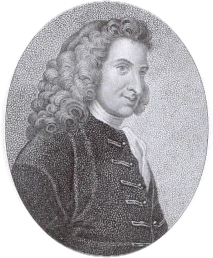
Henry Fielding war ein berühmter englischer Romanautor, Satiriker, Dramatiker, Journalist und Jurist in der Zeit der Aufklärung. Wikipedia
„Jeder Arzt hat seine Lieblingskrankheit.“
Original engl.: "To say the truth, every physician almost hath his favourite disease" The History of Tom Jones (1749), Book II, Ch. 9 Gutenberg.org http://www.gutenberg.org/etext/6593
“They are the affectation of affectation.”
Henry Fielding buch Joseph Andrews
Book III, Ch. 3
Joseph Andrews (1742)
“The only source of the true Ridiculous (as it appears to me) is affectation”
Henry Fielding buch Joseph Andrews
Author's Preface
Joseph Andrews (1742)
Henry Fielding buch Joseph Andrews
Book II, Ch. 14
Joseph Andrews (1742)
“Love and scandal are the best sweeteneers of tea.”
Henry Fielding Love in Several Masques
Act IV, sc. xi
Love in Several Masques (1728)
“It is much easier to make good men wise, than to make bad men good.”
Henry Fielding buch The History of Tom Jones, a Foundling
Quelle: The History of Tom Jones, a Foundling
“Some folks rail against other folks, because other folks have what some folks would be glad of.”
Henry Fielding buch Joseph Andrews
Book IV, Ch. 6
Joseph Andrews (1742)
“Money is the fruit of evil as often as the root of it.”
Don Quixote in England (1731), Act I, scene vi http://books.google.com/books?id=8_VbAAAAQAAJ&q=%22Money+is+the+fruit+of+evil+as+often+as+the+root+of+it%22&pg=PA13#v=onepage
“I describe not men, but manners; not an individual, but a species.”
Henry Fielding buch Joseph Andrews
Book III, Ch. 1
Joseph Andrews (1742)
“No one hath seen beauty in its highest lustre who hath never seen it in distress.”
Henry Fielding buch The History of Tom Jones, a Foundling
Quelle: Tom Jones
Henry Fielding buch The History of Tom Jones, a Foundling
Quelle: The History of Tom Jones, a Foundling
Henry Fielding buch Joseph Andrews
Author's Preface
Joseph Andrews (1742)
Fielding, Henry; ed. by William Ernest Henley. 1903. The Complete Works of Henry Fielding, Esq: Miscellaneous writings. W. Heinemann. p. 162
“Guilt has very quick ears to an accusation.”
Henry Fielding buch Amelia
Book III, ch. 11
Amelia (1751)
“We must eat to live and live to eat.”
Act III, sc. iii
The Miser (1733)
Henry Fielding buch Joseph Andrews
Abraham Adams, speaking of his host, Wilson.
Book III, Ch. 5
Joseph Andrews (1742)
“To whom nothing is given, of him can nothing be required.”
Henry Fielding buch Joseph Andrews
Book II, Ch. 8
Joseph Andrews (1742)
Book V, Ch. 10
The History of Tom Jones (1749)
“Oh, the roast beef of England,
And old England's roast beef!”
The Grub Street Opera (1731), Act iii, scene 2; reported in Bartlett's Familiar Quotations, 10th ed. (1919)
“Oons, sir! do you say that I am drunk? I say, sir, that I am as sober as a judge.”
Don Quixote in England (1731), Act III, scene xiv
“This story will not go down.”
Tumble-down Dick; reported in Bartlett's Familiar Quotations, 10th ed. (1919)
“Can any man have a higher notion of the rule of right and the eternal fitness of things?”
Book IV, Ch. 4
The History of Tom Jones (1749)
Book I, Chapter 1
The History of Tom Jones (1749)
“When children are doing nothing, they are doing mischief.”
Book XV, Ch. 2
The History of Tom Jones (1749)
“All Nature wears one universal grin.”
Act I, sc. i
Tom Thumb the Great (1730)
Book I, Chapter 1
The History of Tom Jones (1749)


