„Jeder Arzt hat seine Lieblingskrankheit.“
Original engl.: "To say the truth, every physician almost hath his favourite disease" The History of Tom Jones (1749), Book II, Ch. 9 Gutenberg.org http://www.gutenberg.org/etext/6593
Henry Fielding war ein berühmter englischer Romanautor, Satiriker, Dramatiker, Journalist und Jurist in der Zeit der Aufklärung. Wikipedia
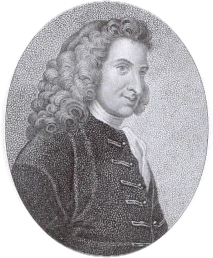
„Jeder Arzt hat seine Lieblingskrankheit.“
Original engl.: "To say the truth, every physician almost hath his favourite disease" The History of Tom Jones (1749), Book II, Ch. 9 Gutenberg.org http://www.gutenberg.org/etext/6593
“Depend on me; never fear your enemies. I'll warrant we make more noise than they.”
Eurydice Hissed : or A Word to the Wise (1736) in The Works of Henry Fielding (1775) in Twelve Volumes, Vol. IV, p. 222
“Thy modesty's a candle to thy merit.”
Act I, sc. iii
Tom Thumb the Great (1730)
Jonathan Wild (1743, rev. 1754), Book III, ch. 7
Henry Fielding buch Amelia
Book IX, Ch. 10
Amelia (1751)
Book XI, Ch. 4
The History of Tom Jones (1749)
Act III, sc. vii
The Miser (1733)
Henry Fielding buch The Journal of a Voyage to Lisbon
The Journal of a Voyage to Lisbon (1754), Introduction
“Covent Garden Journal (11 January 1752)”
Illustrious predecessors.
“Thwackum was for doing justice, and leaving mercy to heaven.”
Book III, Ch. 10
The History of Tom Jones (1749)
Act III, sc. xii
The Miser (1733)
Henry Fielding buch Amelia
Book I, Ch. 1
Amelia (1751)
“Distinction without a difference.”
Book VI, Ch. 13
The History of Tom Jones (1749)
“Much may be said on both sides.”
Spectator, No. 122.
Bartlett's Familiar Quotations, 10th ed. (1919)
“Hairbreadth missings of happiness look like the insults of Fortune.”
Book XIII, Ch. 2
The History of Tom Jones (1749)
“Life may as properly be called an art as any other.”
Henry Fielding buch Amelia
Book I, Ch. 1
Amelia (1751)
“To sun myself in Huncamunca's eyes.”
Act I, sc. iii
Tom Thumb the Great (1730)
Book I, Chapter 2
The History of Tom Jones (1749)
“It is a trite but true observation, that examples work more forcibly on the mind than precepts.”
Henry Fielding buch Joseph Andrews
Book I, Ch. 1
Joseph Andrews (1742)
“It hath been often said, that it is not death, but dying which is terrible.”
Henry Fielding buch Amelia
Book III, Ch. 4
Amelia (1751)
“Men who pay for what they eat will insist on gratifying their palates”
Book I, Chapter 1
The History of Tom Jones (1749)
“When I'm not thanked at all, I'm thanked enough;
I've done my duty, and I've done no more.”
Quelle: Tom Thumb the Great (1730), Act I, sc. iii
Henry Fielding Love in Several Masques
Act II, sc. xi
Love in Several Masques (1728)
The Covent Garden Tragedy (1732), Act V, scene 1
Henry Fielding Love in Several Masques
Act III, sc. vii
Love in Several Masques (1728)
“Every physician almost hath his favorite disease.”
Book II, Ch. 9
The History of Tom Jones (1749)
“These are called the pious frauds of friendship.”
Henry Fielding buch Amelia
Book VI, Ch. 6
Amelia (1751)


