“Friendship, 'tis said, is love without his wings,
And friendship, sir, is sweet enough for me.”
Quelle: Savonarola (1881), Candida to Valori in Act I, sc. ii; p. 35.
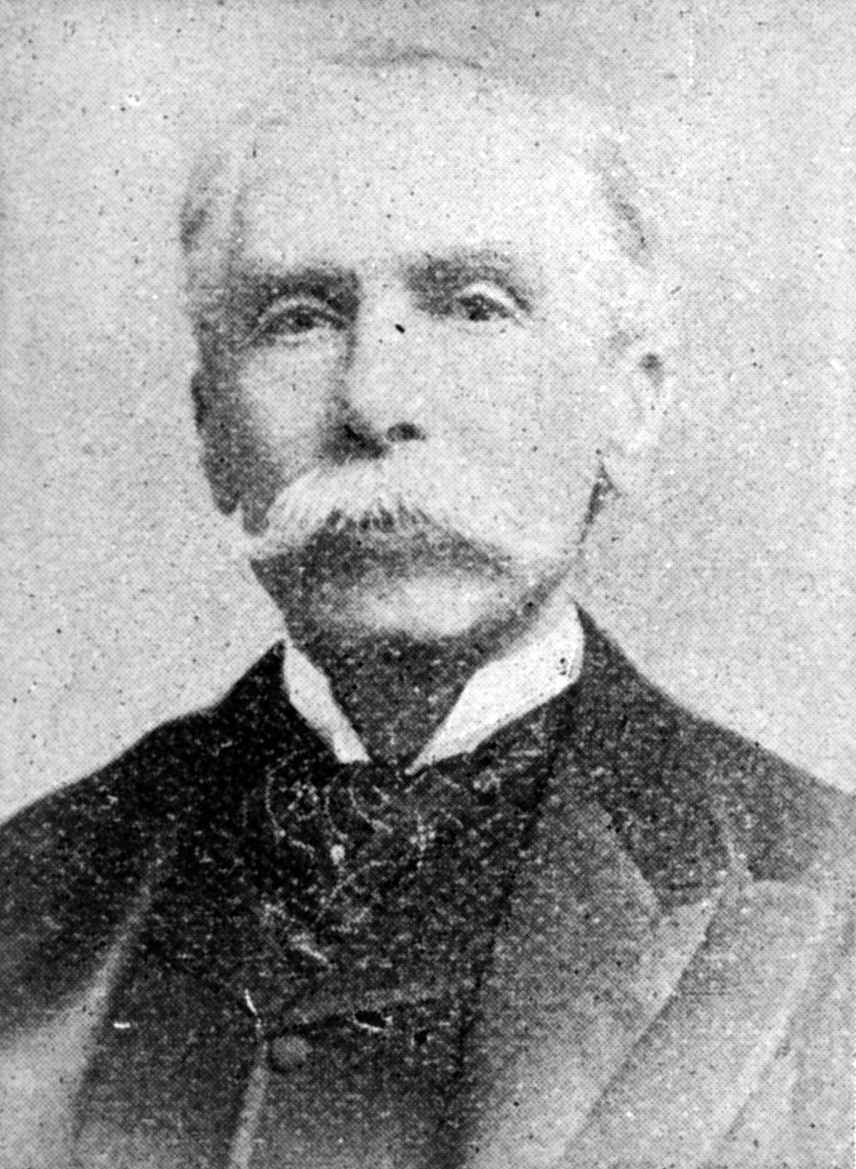
Alfred Austin war ein britischer Schriftsteller.
Austin war der Sohn des Kaufmanns Joseph Austin und dessen Ehefrau, einer Schwester des Bauingenieurs John Locke. Er absolvierte einen Teil seiner Schulzeit am Stonyhurst College und teilweise auf dem Kontinent. Er studierte Rechtswissenschaften an der University of London und schloss dieses Studium 1853 mit einer Promotion ab. Ein Jahr später wurde er London als Barrister zugelassen.
In die Literatur hatte sich Austin schon 1854 anonym durch das Gedicht Roland, das lebhafte Sympathie für Polen ausdrückte, eingeführt. Sein erstes bedeutendes Werk war The season, a satire , eine Verspottung der fashionabeln Saison Londons, das bedeutende satirische Kraft bewies, von der rigoristischen Presse aber mit Unwillen aufgenommen wurde, worauf Alfred Austin alsbald mit dem Pamphlet My satire and its censors antwortete.
Nachdem er 1861 seine Advokatur aufgegeben hatte, um sich ganz der Poesie zu widmen, gab er 1862 das Gedicht The human Tragedy heraus, das 1874 in völliger Neubearbeitung erschien.
Daneben hat Alfred Austin eine Menge literarischer Essays verfasst, deren hauptsächlichstes in dem lesenswerten, doch nicht unparteiischen Werk The poetry of the period gesammelt erschienen. Als Berichterstatter der Zeitung Standard war er während des vatikanischen Konzils in Rom und 1870/71 für die Dauer des Deutsch-Französischen Kriegs im Hauptquartier des Königs von Preußen. Für die konservative Partei von jeher sehr tätig, war Alfred Austin namentlich während des letzten Orientkriegs ein lebhafter Verteidiger der Politik Disraelis.
“Friendship, 'tis said, is love without his wings,
And friendship, sir, is sweet enough for me.”
Quelle: Savonarola (1881), Candida to Valori in Act I, sc. ii; p. 35.
Quelle: Poetry Quotes, Is Life Worth Living? http://infomotions.com/etexts/gutenberg/dirs/1/9/3/1/19316/19316.htm (1896)
“He is dead already who doth not feel
Life is worth living still.”
Quelle: Is Life Worth Living? http://infomotions.com/etexts/gutenberg/dirs/1/9/3/1/19316/19316.htm (1896)
Quelle: Is Life Worth Living? http://infomotions.com/etexts/gutenberg/dirs/1/9/3/1/19316/19316.htm (1896)
“Show me your garden, provided
it be your own, and I will tell you what you are
like.”
Quelle: The Garden that I Love (1905)
“O'er the wires the electric message came,
"He is no better; he is much the same."”
On the Illness of the Prince of Wales (1910)
An 1871 poem on the illness of the Prince of Wales, although there is some doubt that Austin actually wrote this part. That classic compendium "The Stuffed Owl: An Anthology of Bad Verse" (2d ed. 1930; Capricorn paperback 1962) includes a dozen quotations from Austin but attributes this particular couplet (p. 17) to a "university poet unknown." It also provides a metrically more accurate first line, "Across the wires the gloomy message came," plus "not" for "no" in the second line.
On the Illness of the Prince of Wales (1910)
Prose Papers on Poetry Macmillan & Co 1910.
Prose Papers on Poetry (1910)
Quelle: As quoted in Growing with the Seasons (2008) by Frank & Vicky Giannangelo, p. 115., and one or two other gardening books, as well as on various internet gardening sites and lists of quotations. However, it is sometimes attributed to Voltaire, and about one-third of the time it is quoted without attribution (at times even without quotation marks). It is not to be found in Austin's The Garden That I Love or any of its five sequels.
Is Life Worth Living? http://infomotions.com/etexts/gutenberg/dirs/1/9/3/1/19316/19316.htm (1896)
Quelle: The Garden That I Love (1894), p. 22.
“[…] faded smiles oft linger in the face,
While grief's first flakes fall silent on the head!”
Quelle: "Unseasonable Snows", line 13; p. 38, Lyrical Poems (1891)
Quelle: "My Winter Rose", stanza VII; p. 23., Lyrical Poems (1891)
Quelle: "Nature and the Book", Stanza XX; p. 69, At the Gate of the Convent (1885)
Quelle: "Nature and the Book", stanza XVII; p. 68, At the Gate of the Convent (1885)
Quelle: "Nature and the Book", stanza XV; p. 67, At the Gate of the Convent (1885)
"Prelude", stanza XI; p. ix., At the Gate of the Convent (1885)
Quelle: Candida to Valori in Act IV, sc. iv; p. 262, Savonarola (1881)
Quelle: "Goodnight!", in Lamia's Winter-Quarters (London: Macmillan and Co., 1898), p. 163.
“Who loves his country never forfeits heaven.”
Quelle: Savonarola (1881), Candida to Valori in Act IV, sc. vi; p. 285.
“Never fear to weep;
For tears are summer showers to the soul,
To keep it fresh and green.”
Quelle: Savonarola (1881), Candida to Valori in Act IV, sc. iv; p. 264.
“Your logic may be good,
But dialectics never saved a soul.”
Quelle: Savonarola (1881), Frà Domenico in Act II, sc. ix; p. 197.
“Death is the looking-glass of life wherein
Each man may scan the aspect of his deeds.”
Quelle: Savonarola (1881), Girolamo Savonarola in Act I, sc. iv; p. 49.
“Know, Nature, like the cuckoo, laughs at law,
Placing her eggs in whatso nest she will.”
Quelle: Savonarola (1881), Lorenzo de' Medici in Act I, sc. i; p. 14.
Quelle: Savonarola (1881), Lorenzo de' Medici in Act I, sc. i; pp. 6–7.
Quelle: Savonarola (1881), Lorenzo de' Medici in Act I, sc. i; p. 6.
Quelle: Fortunatus the Pessimist (1892), Urania in Act IV, sc. ii; p. 178.
“Why should you,
Because the world is foolish, not be wise?”
Quelle: Fortunatus the Pessimist (1892), Franklin in Act II, sc. iv; p. 109.
“There is no office in this needful world
But dignifies the doer if done well.”
Quelle: Fortunatus the Pessimist (1892), Franklin in Act I, sc. iv; p. 65.
“The Devil is an echo
Of search unsatisfied.”
Quelle: Fortunatus the Pessimist (1892), Fortunatus in Act I, sc. iii; p. 35.


