José Guilherme Merquior Zitate

José Guilherme Merquior war brasilianischer Diplomat, Journalist, Soziologe, Literaturkritiker und Philosoph.
✵ 22. April 1941 – 7. Januar 1991
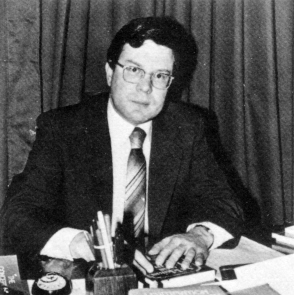
José Guilherme Merquior Foto
José Guilherme Merquior: 2 Zitate0 Gefällt mir

José Guilherme Merquior: Zitate auf Englisch

“[A] number of points are worth making at once [that challenge Foucault’s Madness and Civilization]: (1) There is ample evidence of medieval cruelty towards the insane; (2) In the late Middle Ages and the Renaissance, the mad were already confined, to cells, jails or even cages; (3) ‘dialogue’ or no ‘dialogue’, even madness during those times was frequently connected with sin -- even in the Ship of Fools mythology; and, to that extent, it was regarded in a far less benevolent light than suggested by Foucault (pre-modern minds accepted the reality of madness -- ‘madness as a part of truth’ -- just as they accepted the reality of sin; but this does not mean they valued madness, any more than sin; (4) as Martin Schrenk (himself a severe critic Foucault) has shown, early modern madhouses developed from medieval hospitals and monasteries rather than as reopened leprosaria; (5) the Great Confinement was primarily aimed not at deviance but at poverty -- criminal poverty, crazy poverty or just plain poverty; the notion that it heralded (in the name of the rising bourgeoise) a moral segregation does not bear close scrutiny; (6) at any rate, as stressed by Klaus Doerner, another of critic of Foucault (Madmen and the Bourgeoisie, 1969), that there was no uniform state-controlled confinement: the English and German patterns, for example, strayed greatly from the Louis Quatorzian Grand Renfermement; (7) Foucault’s periodization seems to me amiss. By the late eighteenths century, confinement of the poor was generally deemed a failure; but it is then that confinement of the mad really went ahead, as so conclusively shown in statistics concerning England, France, and the United States; (8) Tuke and Pinel did not ‘invent’ mental illness. Rather, they owe much to prior therapies and often relied also on their methods; (9) moreover, in nineetenth-century England moral treatment was not that central in the medicalization of madness. Far from it: as shown by Andrew Scull, physicians saw Tukean moral therapy as a lay threat to their art, and strove to avoid it or adapt it to their own practice. Once more, Foucault’s epochal monoliths crumble before the contradictory wealth of the historical evidence.”

José Guilherme Merquior buch Foucault

Quelle: Foucault (1985), pp. 28-29

Ähnliche Autoren

Zygmunt Bauman Foto
Zygmunt Bauman70
britisch-polnischer Soziologe und Philosoph None
José Ortega Y Gasset Foto
José Ortega Y Gasset10
spanischer Philosoph, Soziologe und Essayist None
Michel Foucault Foto
Michel Foucault10
französischer Philosoph None
Jair Bolsonaro Foto
Jair Bolsonaro10
brasilianischer Politiker und Kongressabgeordneter None
George Santayana Foto
George Santayana2
spanischer Philosoph und Schriftsteller None
Theodor W. Adorno Foto
Theodor W. Adorno38
deutscher Philosoph, Soziologe, Musiktheoretiker und Kompon… None
Henry Louis Mencken Foto
Henry Louis Mencken34
US-amerikanischer Publizist und Schriftsteller None
Paul Claudel Foto
Paul Claudel2
französischer Schriftsteller, Dichter und Diplomat None
Hélder Câmara Foto
Hélder Câmara1
brasilianischer Geistlicher, Erzbischof von Olinda und Reci… None
Giorgos Seferis Foto
Giorgos Seferis1
griechischer Schriftsteller und Diplomat; Nobelpreisträger … None