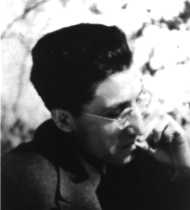
Cesare Pavese Berühmte Zitate
„Der Reichtum des Lebens besteht aus vergessenen, aber gemeinsamen Erinnerungen.“
Das Handwerk des Lebens. Meist falsch zitiert als: Der Reichtum des Lebens besteht aus vergessenen, aber gemeinsamen Erinnerungen. "La ricchezza della vita è fatta di ricordi, dimenticati." - Il mestiere di vivere. 13 febbraio 1944. books.google https://books.google.de/books?id=MqEqAQAAMAAJ&q=dimenticati
Das Handwerk des Lebens. Zitiert nach Heinrich Heine (Aachen, Verlag Dr. Rudolf Georgi, 1968, = Text + Kritik Nr. 18/19, Hg. Heinz Ludwig Arnold) S. 12 books.google https://books.google.de/books?id=GRPtAAAAMAAJ&q=anfangen <br class="br">("L'unica gioia al mondo è cominciare. È bello vivere perché vivere è cominciare, sempre, ad ogni istante." - Il mestiere di vivere. Diario 1935-1950. p.58 books.google https://books.google.de/books?id=MqEqAQAAMAAJ&q=cominciare, 23 novembre [1937] <br class="br">Zitate mit Quellenangabe
„Warten ist noch eine Beschäftigung. Auf nichts warten - das ist schrecklich.“
Das Handwerk des Lebens
"Aspettare è ancora un'occupazione. È non aspettar niente che è terribile." - Il mestiere di vivere. 15 settembre 1946
Zitate mit Quellenangabe
Das Handwerk des Lebens. 28. Januar 1942
"Le cose si scoprono attraverso i ricordi che se ne hanno. Ricordare una cosa significa vederla – ora soltanto – per la prima volta." - Il mestiere di vivere. 28 gennaio 1942
Zitate mit Quellenangabe
Cesare Pavese: Zitate auf Englisch
Quelle: The moon and the bonfire (1950), Chapter XXVI, p. 149
“Because, to despise money, one must have plenty of it.”
This Business of Living (1935-1950)
“Suicides are timid murderers. Masochism instead of Sadism.”
This Business of Living (1935-1950)
“He told me that it isn't what you do but how you do it that shows whether you are clever or not.”
Quelle: The moon and the bonfire (1950), Chapter XVII, p. 99
“Love is the cheapest of religions.”
This Business of Living (1935-1950)
This Business of Living (1935-1950)
Ending words
Among women only (1949)
“What we desire is not to possess a woman, but to be the only one to possess her.”
This Business of Living (1935-1950)
“It's pointless to cry. One is born and dies alone…”
Quelle: The house on the hill (1949), Chapter 8, p. 105


