A.E. Housman buch A Shropshire Lad
No. 13, st. 2.
A Shropshire Lad (1896)
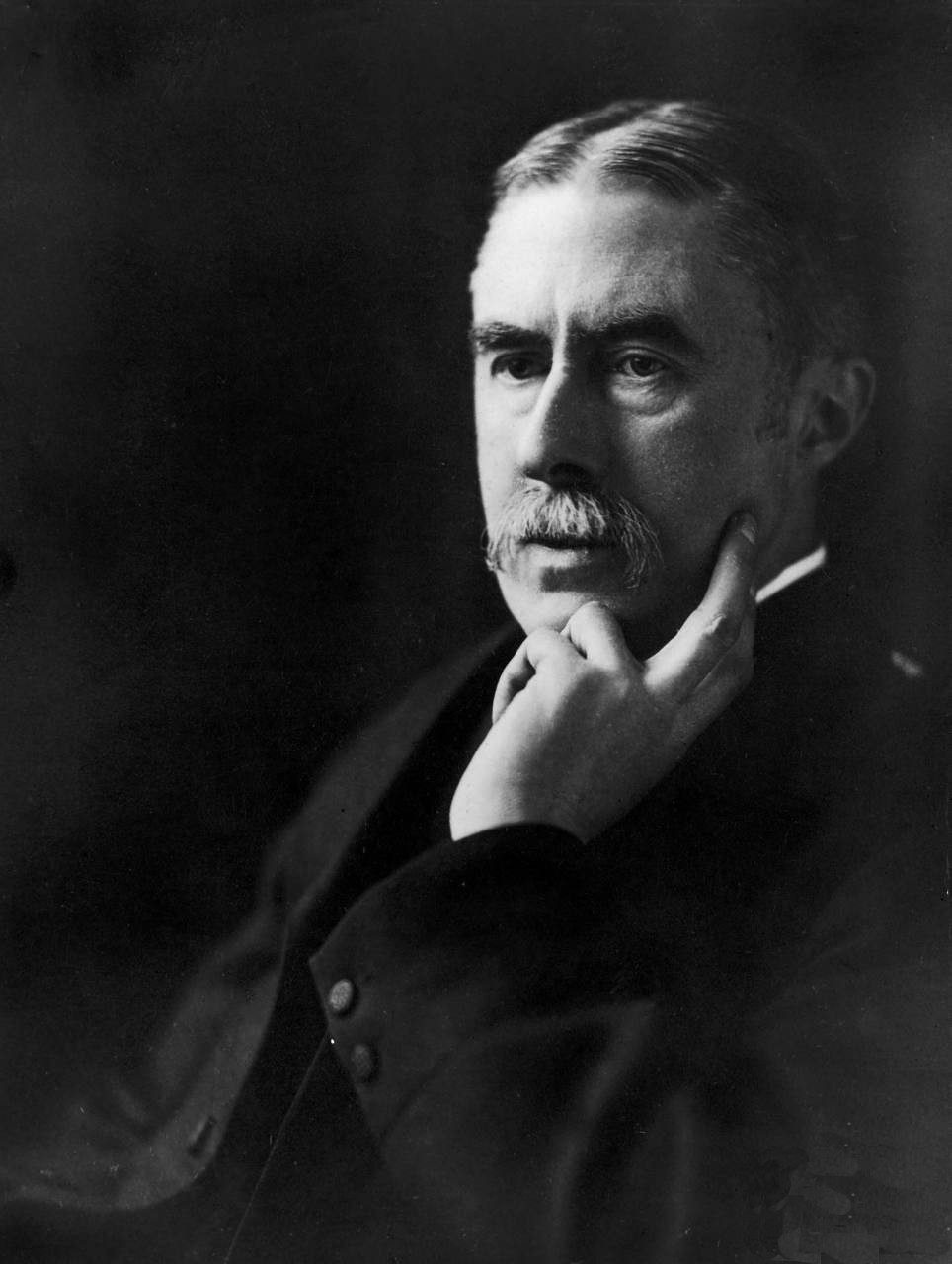
Alfred Edward Housman , normalerweise bekannt als A. E. Housman, war ein englischer Gelehrter und Dichter, der am besten für seinen 1896 erschienenen Gedichtband A Shropshire Lad bekannt ist. Die dort enthaltenen Gedichte beschreiben die verlorene Jugend in ländlichen Gegenden Englands. Sie bedienen sich einer knappen, ausdrucksstarken Sprache und Symbolik. Dadurch waren sie bei englischen Komponisten des frühen 20. Jahrhunderts beliebt und wurden oft vertont. Housmans Gedichte sind eng mit der Epoche und mit Shropshire selbst verbunden.
Housman war einer der führenden Altphilologen seiner Zeit und ist als einer der größten Gelehrten aller Zeiten bezeichnet worden. Er erwarb sein Ansehen als Privatgelehrter und wurde auf Grund der Qualität seiner Veröffentlichungen zum Professor für Latein am University College London und später in Cambridge ernannt. Wikipedia
A.E. Housman buch A Shropshire Lad
No. 13, st. 2.
A Shropshire Lad (1896)
A.E. Housman buch A Shropshire Lad
No. 62, st. 3.
Quelle: A Shropshire Lad (1896)
A.E. Housman buch A Shropshire Lad
No. 40.
Quelle: A Shropshire Lad (1896)
No. 19, st. 2. <br class="br">Quelle: More Poems http://www.kalliope.org/vaerktoc.pl?vid=housman/1936 (1936)
A.E. Housman buch A Shropshire Lad
No. 23, st. 4.
A Shropshire Lad (1896)
“The rainy Pleiads wester,
Orion plunges prone,
The stroke of midnight ceases,
And I lie down alone.”
No. 11, st. 1. <br class="br"> More Poems http://www.kalliope.org/vaerktoc.pl?vid=housman/1936 (1936)
No. 10, st. 2. <br class="br"> Last Poems http://www.gutenberg.org/dirs/etext05/8lspm10.txt (1922)
A.E. Housman buch A Shropshire Lad
No. 18.
A Shropshire Lad (1896)
No. 9, st. 1. <br class="br"> Last Poems http://www.gutenberg.org/dirs/etext05/8lspm10.txt (1922)
“Hope lies to mortals
And most believe her,
But man's deceiver
Was never mine.”
No. 6, st. 1. <br class="br"> More Poems http://www.kalliope.org/vaerktoc.pl?vid=housman/1936 (1936)
“Loveliest of trees, the cherry now
Is hung with bloom along the bough.”
A.E. Housman buch A Shropshire Lad
No. 2, st. 1.
A Shropshire Lad (1896)
"Letter to Gilbert Murray" (April 23, 1900).
Saturae of Juvenal (Cambridge University Press, [1905] 1931) p. xi.
A.E. Housman buch A Shropshire Lad
No. 4 ("Reveille"), st. 6.
A Shropshire Lad (1896)
No. 9, st. 7. <br class="br"> Last Poems http://www.gutenberg.org/dirs/etext05/8lspm10.txt (1922)
“His folly has not fellow
Beneath the blue of day
That gives to man or woman
His heart and soul away.”
A.E. Housman buch A Shropshire Lad
No. 14, st. 3.
A Shropshire Lad (1896)
From a list of insults drafted by A E Housman, and posthumously published in Laurence Housman's A. E. H. (1937) pp. 89-90. The name was left blank in the original, but was intended to be filled in and used when a suitable subject should turn up.
A.E. Housman buch A Shropshire Lad
No. 52, st. 1.
A Shropshire Lad (1896)
"Letter to Neilson Abeel" (October 4, 1935).
"The Application of Thought to Textual Criticism", a lecture delivered on August 4, 1921
A.E. Housman buch A Shropshire Lad
No. 48, st. 1.
A Shropshire Lad (1896)
No. 24 ("Epithalamium"), st. 3. <br class="br"> Last Poems http://www.gutenberg.org/dirs/etext05/8lspm10.txt (1922)
“I find Cambridge an asylum, in every sense of the word.”
A remark made in conversation, according to Grant Richards Housman 1897-1936 (1942) p. 100.
Attributed


