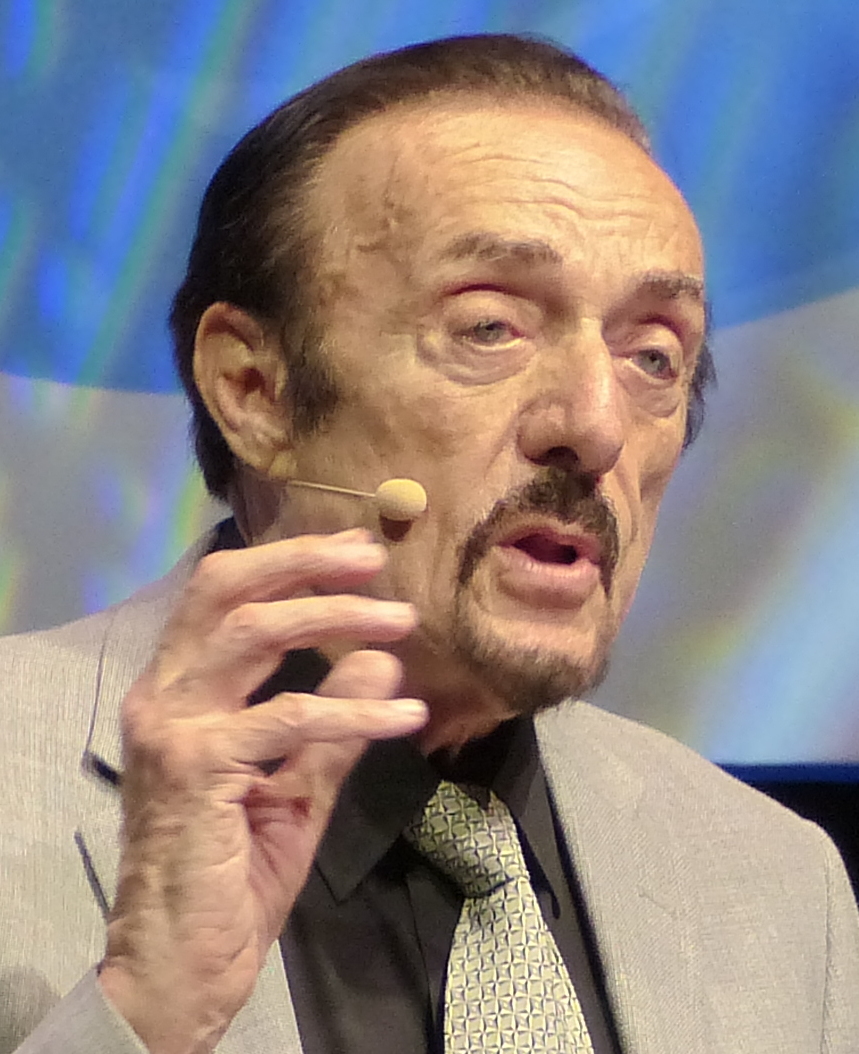
Philip Zimbardo: Zitate auf Englisch
Zimbardo to those selected to be "prison guards"
Stanford prison experiment (1971)
Kontext: You can create in the prisoners feelings of boredom, a sense of fear to some degree, you can create a notion of arbitrariness that their life is totally controlled by us, by the system, you, me, and they'll have no privacy... We're going to take away their individuality in various ways. In general what all this leads to is a sense of powerlessness. That is, in this situation we'll have all the power and they'll have none.
In "Who was Lucifer and how did he become the Devil?" (2007) http://www.lucifereffect.com/lucifer.htm
"The Banality of Heroism" in The Greater Good (Fall/Winter 2006/2007) http://greatergood.berkeley.edu/article/item/the_banality_of_heroism/, co-written with Zeno Franco <br class="br">Kontext: Whether we consider Nazi Germany or Abu Ghraib prison, there were many people who observed what was happening and said nothing. At Abu Ghraib, one photo shows two soldiers smiling before a pyramid of naked prisoners while a dozen other soldiers stand around watching passively. If you observe such abuses and don’t say, “This is wrong! Stop it!” you give tacit approval to continue. You are part of the silent majority that makes evil deeds more acceptable.
In his introduction to his site on The Lucifer Effect (2007) http://www.lucifereffect.com/ <br class="br">Kontext: I summarize more than 30 years of research on factors that can create a "perfect storm" which leads good people to engage in evil actions. This transformation of human character is what I call the "Lucifer Effect," named after God's favorite angel, Lucifer, who fell from grace and ultimately became Satan.<br>Rather than providing a religious analysis, however, I offer a psychological account of how ordinary people sometimes turn evil and commit unspeakable acts.
"The Banality of Heroism" in The Greater Good (Fall/Winter 2006/2007), co-written with Zeno Franco
Kontext: The idea of the banality of heroism debunks the myth of the “heroic elect,” a myth that reinforces two basic human tendencies. The first is to ascribe very rare personal characteristics to people who do something special — to see them as superhuman, practically beyond comparison to the rest of us. The second is the trap of inaction — sometimes known as the "bystander effect." Research has shown that the bystander effect is often motivated by diffusion of responsibility, when different people witnessing an emergency all assume someone else will help. Like the “good guards,” we fall into the trap of inaction when we assume it’s someone else’s responsibility to act the hero.
“Sticks and stones can break your bones, but names can kill you.”
Philip G. Zimbardo buch The Lucifer Effect
Quelle: The Lucifer Effect: Understanding How Good People Turn Evil
Philip G. Zimbardo buch The Lucifer Effect
Quelle: The Lucifer Effect: Understanding How Good People Turn Evil


.jpg)