„Der Wettbewerb liegt schon im Instinkt des Unternehmers.“
Die moderne Industriegesellschaft
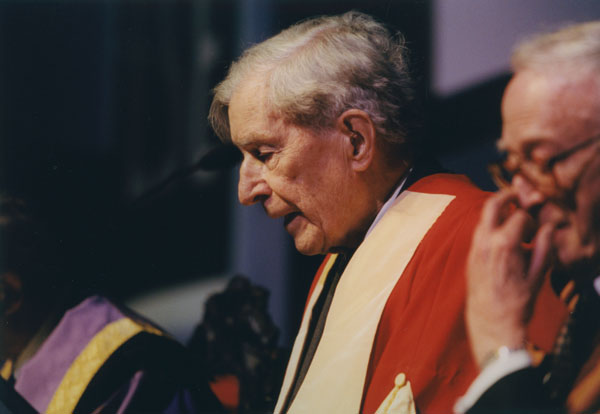
John Kenneth Galbraith war ein kanadisch-US-amerikanischer Ökonom, Sozialkritiker, Präsidentenberater, Romancier und Diplomat. Galbraith war einer der einflussreichsten Ökonomen des 20. Jahrhunderts, als Keynesianer und Linksliberaler setzte er sich zeitlebens für eine Stärkung der staatlichen Institutionen und für eine Förderung der Nachfrage ein. Wikipedia
„Der Wettbewerb liegt schon im Instinkt des Unternehmers.“
Die moderne Industriegesellschaft
„In neuerer Zeit ist Wachstum zum wichtigsten Heilmittel gegen Arbeitslosigkeit geworden.“
Die moderne Industriegesellschaft
„Planung erfordert eine Vielzahl von Einzelinformationen.“
Die moderne Industriegesellschaft
John Kenneth Galbraith buch Gesellschaft im Überfluss
Gesellschaft im Überfluss, Knaur 1970, S. 17
Booknotes interview (1994)
John Kenneth Galbraith buch Gesellschaft im Überfluss
Quelle: The Affluent Society (1958), Chapter 11, Section IV, p. 130
John Kenneth Galbraith buch The Great Crash, 1929
Chapter IX https://openlibrary.org/books/OL25728842M/The_Great_Crash_1929, Cause and Consequence, Section V, p 184 <br class="br">The Great Crash, 1929 (1954 and 1997 https://openlibrary.org/books/OL25728842M/The_Great_Crash_1929)
John Kenneth Galbraith buch The Great Crash, 1929
Chapter IX https://openlibrary.org/books/OL25728842M/The_Great_Crash_1929, Cause and Consequence, Section V, p 178 <br class="br">The Great Crash, 1929 (1954 and 1997 https://openlibrary.org/books/OL25728842M/The_Great_Crash_1929)
John Kenneth Galbraith buch Gesellschaft im Überfluss
Quelle: The Affluent Society (1958), Chapter 8, Section II, p. 87
“Wealth, in even the most improbable cases, manages to convey the aspect of intelligence.”
The Sydney Morning Herald (22 May 1982), as cited in The Columbia Dictionary of Quotations (1993), edited by Robert Andrews, p. 972
John Kenneth Galbraith buch The Great Crash, 1929
Chapter VII https://openlibrary.org/books/OL25728842M/The_Great_Crash_1929, Aftermath I, Section IV, p 139 <br class="br">The Great Crash, 1929 (1954 and 1997 https://openlibrary.org/books/OL25728842M/The_Great_Crash_1929)
John Kenneth Galbraith buch The New Industrial State
Quelle: The New Industrial State (1967), Chapter XXXV, Section 2, p. 390
“Any country that has Milton Friedman as an adviser has nothing to fear from a few million Arabs.”
on Friedman's advising of the Israeli government, "The Private Man and the Public Life; Interview With Galbraith", The Washington Post (26 April 1981)
John Kenneth Galbraith buch The Great Crash, 1929
Quelle: The Great Crash, 1929 (1954 and 1997 https://openlibrary.org/books/OL25728842M/The_Great_Crash_1929), Chapter V, The Twilight of Illusion, Section II, p. 70
The press was busy printing money.
Quelle: Money: Whence It Came, Where It Went (1975), Chapter V, Of Paper, p. 54
John Kenneth Galbraith buch Gesellschaft im Überfluss
Quelle: The Affluent Society (1958), Chapter 5, Section I, p. 47
John Kenneth Galbraith buch The New Industrial State
Quelle: The New Industrial State (1967), Chapter XII, Section 1, p. 142
John Kenneth Galbraith buch Gesellschaft im Überfluss
Quelle: The Affluent Society (1958), Chapter 18, Section II, p. 203
Booknotes interview (1994)
John Kenneth Galbraith buch The Great Crash, 1929
Chapter IX https://openlibrary.org/books/OL25728842M/The_Great_Crash_1929, Cause and Consequence, Section VII, p 190 <br class="br">The Great Crash, 1929 (1954 and 1997 https://openlibrary.org/books/OL25728842M/The_Great_Crash_1929)
John Kenneth Galbraith buch The New Industrial State
Quelle: The New Industrial State (1967), Chapter XVIII, Section 5, p. 208
John Kenneth Galbraith buch The Great Crash, 1929
Chapter VI https://openlibrary.org/books/OL25728842M/The_Great_Crash_1929, Things Become More Serious, Section II, p 111 <br class="br">The Great Crash, 1929 (1954 and 1997 https://openlibrary.org/books/OL25728842M/The_Great_Crash_1929)
“Economists are generally negligent of their heroes.”
Quelle: The Age of Uncertainty (1977), Chapter 1, p. 27
John Kenneth Galbraith buch The New Industrial State
Quelle: The New Industrial State (1967), Chapter X, Section 5, p. 122 (Mr. Galbraith was originally an agricultural economist...)
Quelle: Money: Whence It Came, Where It Went (1975), Chapter I, Money, p. 4
John Kenneth Galbraith buch The Great Crash, 1929
Quelle: The Great Crash, 1929 (1954 and 1997 https://openlibrary.org/books/OL25728842M/The_Great_Crash_1929), Chapter IV, In Goldman Sachs We Trust, Section VI, p. 63
John Kenneth Galbraith buch The Great Crash, 1929
Chapter VI https://openlibrary.org/books/OL25728842M/The_Great_Crash_1929, Things Become More Serious, Section I, p 109 <br class="br">The Great Crash, 1929 (1954 and 1997 https://openlibrary.org/books/OL25728842M/The_Great_Crash_1929)
Quelle: The Age of Uncertainty (1977), Chapter 1, p. 30 (On Robert Owen)
“Private enterprise did not get us atomic energy.”
John Kenneth Galbraith buch Gesellschaft im Überfluss
Quelle: The Affluent Society (1958), Chapter 25, Section III, p. 274
Quelle: The Age of Uncertainty (1977), Chapter 2, p. 84
“One man's consumption becomes his neighbor's wish.”
John Kenneth Galbraith buch Gesellschaft im Überfluss
Quelle: The Affluent Society (1958), Chapter 11, Section II, p. 125
John Kenneth Galbraith buch The New Industrial State
Quelle: The New Industrial State (1967), Chapter XXIX, Section 7, p. 339-340
John Kenneth Galbraith buch The Culture of Contentment
Quelle: The Culture of Contentment (1992), Ch. 5


