„Der Wettbewerb liegt schon im Instinkt des Unternehmers.“
Die moderne Industriegesellschaft
John Kenneth Galbraith war ein kanadisch-US-amerikanischer Ökonom, Sozialkritiker, Präsidentenberater, Romancier und Diplomat. Galbraith war einer der einflussreichsten Ökonomen des 20. Jahrhunderts, als Keynesianer und Linksliberaler setzte er sich zeitlebens für eine Stärkung der staatlichen Institutionen und für eine Förderung der Nachfrage ein. Wikipedia
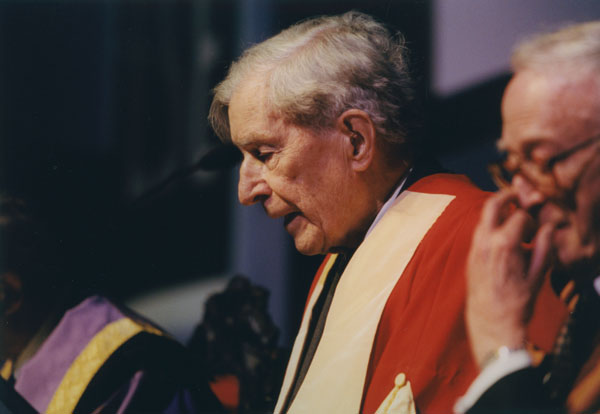
„Der Wettbewerb liegt schon im Instinkt des Unternehmers.“
Die moderne Industriegesellschaft
„In neuerer Zeit ist Wachstum zum wichtigsten Heilmittel gegen Arbeitslosigkeit geworden.“
Die moderne Industriegesellschaft
„Planung erfordert eine Vielzahl von Einzelinformationen.“
Die moderne Industriegesellschaft
John Kenneth Galbraith buch Gesellschaft im Überfluss
Gesellschaft im Überfluss, Knaur 1970, S. 17
The United States (1971)
John Kenneth Galbraith buch The New Industrial State
Quelle: The New Industrial State (1967), Chapter XXXI, Section 1, p. 354
John Kenneth Galbraith buch Gesellschaft im Überfluss
Quelle: The Affluent Society (1958), Chapter 13, Section V, p. 155
Quelle: The Age of Uncertainty (1977), Chapter 5, p. 133
John Kenneth Galbraith buch Gesellschaft im Überfluss
Quelle: The Affluent Society (1958), Chapter 12, Section VII, p. 145
Quelle: Money: Whence It Came, Where It Went (1975), Chapter X, The Impeccable System, p. 118
Letter to John F. Kennedy (2 March 1962), printed in Galbraith's Ambassador's Journal (1969)
Interview with John Newark (1990) from Interviews with John Kenneth Galbraith (2004) http://aurora.icaap.org/talks/galbraith.htm, ed. James Ronald Stanfield and Jacqueline Bloom Stanfield
John Kenneth Galbraith buch The Great Crash, 1929
Quelle: The Great Crash, 1929 (1954 and 1997 https://openlibrary.org/books/OL25728842M/The_Great_Crash_1929), Chapter V, The Twilight of Illusion, Section V, p. 83
John Kenneth Galbraith buch The Great Crash, 1929
Quelle: The Great Crash, 1929 (1954 and 1997 https://openlibrary.org/books/OL25728842M/The_Great_Crash_1929), Chapter VII, Things Become More Serious, Section VIII, p. 130
John Kenneth Galbraith buch Gesellschaft im Überfluss
Quelle: The Affluent Society (1958), Chapter 4, Section IV, p. 45
John Kenneth Galbraith buch The Great Crash, 1929
Quelle: The Great Crash, 1929 (1954 and 1997 https://openlibrary.org/books/OL25728842M/The_Great_Crash_1929), Chapter III, Something Should Be Done?, Section IV, p. 38
The United States (1971)
John Kenneth Galbraith buch The Great Crash, 1929
Chapter IX https://openlibrary.org/books/OL25728842M/The_Great_Crash_1929, Cause and Consequence, Section V, p 183 <br class="br">The Great Crash, 1929 (1954 and 1997 https://openlibrary.org/books/OL25728842M/The_Great_Crash_1929)
John Kenneth Galbraith buch The New Industrial State
Quelle: The New Industrial State (1967), Chapter XXXV, Section 5, p. 398
John Kenneth Galbraith buch The New Industrial State
Foreword p. vii
The New Industrial State (1967)
“Foresight is an imperfect thing — all prevision in economics is imperfect.”
Quelle: Money: Whence It Came, Where It Went (1975), Chapter XIX, The New Economics At High Noon, p. 269
John Kenneth Galbraith buch The New Industrial State
Quelle: The New Industrial State (1967), Chapter XIX, Section 4, p. 217
John Kenneth Galbraith buch The New Industrial State
Quelle: The New Industrial State (1967), Chapter XXX, Section 7, p. 353
John Kenneth Galbraith buch The Great Crash, 1929
Chapter VIII https://openlibrary.org/books/OL25728842M/The_Great_Crash_1929, Aftermath II, Section IV, p 154 <br class="br">The Great Crash, 1929 (1954 and 1997 https://openlibrary.org/books/OL25728842M/The_Great_Crash_1929)
John Kenneth Galbraith buch The Great Crash, 1929
Quelle: The Great Crash, 1929 (1954 and 1997 https://openlibrary.org/books/OL25728842M/The_Great_Crash_1929), Chapter I, "Vision and Boundless Hope and Optimism" p. 10
Quelle: The Age of Uncertainty (1977), Chapter 2, p. 62
Booknotes interview (1994)
John Kenneth Galbraith buch The Great Crash, 1929
Chapter VIII https://openlibrary.org/books/OL25728842M/The_Great_Crash_1929, Aftermath II, Section VI, p 165 <br class="br">The Great Crash, 1929 (1954 and 1997 https://openlibrary.org/books/OL25728842M/The_Great_Crash_1929)
“Simple minds, presumably, are the easiest to manage.”
John Kenneth Galbraith buch Gesellschaft im Überfluss
Quelle: The Affluent Society (1958), Chapter 19, Section V, p. 218
Power and the Useful Economist (1973)
Quoted in conversation with Charles Frankel, High on Foggy Bottom: an outsider's inside view of the Government (1969), p. 11
Quelle: Money: Whence It Came, Where It Went (1975), Chapter XXI, Afterword, p. 312
"The Convenient Reverse of Logic in Our Time," commencement address, American University (1984); reprinted in A View from the Stands (1986)
Quelle: The Age of Uncertainty (1977), Chapter 8, p. 245 (on Nikita Khrushchev)


