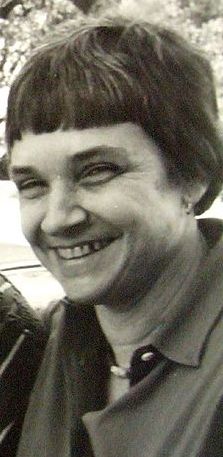
Adrienne Rich: Zitate auf Englisch
“Lying is done with words, and also with silence.”
Quelle: Women and Honor: Some Notes on Lying
"Legislators of the world" in The Guardian (18 November 2006)
Kontext: Of course, like the consciousness behind it, behind any art, a poem can be deep or shallow, glib or visionary, prescient or stuck in an already lagging trendiness. What's pushing the grammar and syntax, the sounds, the images — is it the constriction of literalism, fundamentalism, professionalism — a stunted language? Or is it the great muscle of metaphor, drawing strength from resemblance in difference? Poetry has the capacity to remind us of something we are forbidden to see. A forgotten future: a still uncreated site whose moral architecture is founded not on ownership and dispossession, the subjection of women, outcast and tribe, but on the continuous redefining of freedom — that word now held under house arrest by the rhetoric of the "free" market. This on-going future, written-off over and over, is still within view. All over the world its paths are being rediscovered and reinvented.
There is always that in poetry which will not be grasped, which cannot be described, which survives our ardent attention, our critical theories, our late-night arguments. There is always (I am quoting the poet/translator Américo Ferrari|) "an unspeakable where, perhaps, the nucleus of the living relation between the poem and the world resides".
"Legislators of the world" in The Guardian (18 November 2006) http://books.guardian.co.uk/comment/story/0,,1950812,00.html <br class="br">Kontext: I'm both a poet and one of the "everybodies" of my country. I live with manipulated fear, ignorance, cultural confusion and social antagonism huddling together on the faultline of an empire. I hope never to idealise poetry — it has suffered enough from that. Poetry is not a healing lotion, an emotional massage, a kind of linguistic aromatherapy. Neither is it a blueprint, nor an instruction manual, nor a billboard. There is no universal Poetry, anyway, only poetries and poetics, and the streaming, intertwining histories to which they belong. There is room, indeed necessity, for both Neruda and César Valléjo, for Pier Paolo Pasolini and Alfonsina Storni, for both Ezra Pound and Nelly Sachs. Poetries are no more pure and simple than human histories are pure and simple. And there are colonised poetics and resilient poetics, transmissions across frontiers not easily traced.
"Legislators of the world" in The Guardian (18 November 2006) http://books.guardian.co.uk/comment/story/0,,1950812,00.html <br class="br">Kontext: I'm both a poet and one of the "everybodies" of my country. I live with manipulated fear, ignorance, cultural confusion and social antagonism huddling together on the faultline of an empire. I hope never to idealise poetry — it has suffered enough from that. Poetry is not a healing lotion, an emotional massage, a kind of linguistic aromatherapy. Neither is it a blueprint, nor an instruction manual, nor a billboard. There is no universal Poetry, anyway, only poetries and poetics, and the streaming, intertwining histories to which they belong. There is room, indeed necessity, for both Neruda and César Valléjo, for Pier Paolo Pasolini and Alfonsina Storni, for both Ezra Pound and Nelly Sachs. Poetries are no more pure and simple than human histories are pure and simple. And there are colonised poetics and resilient poetics, transmissions across frontiers not easily traced.
"Legislators of the world" in The Guardian (18 November 2006)
Kontext: Of course, like the consciousness behind it, behind any art, a poem can be deep or shallow, glib or visionary, prescient or stuck in an already lagging trendiness. What's pushing the grammar and syntax, the sounds, the images — is it the constriction of literalism, fundamentalism, professionalism — a stunted language? Or is it the great muscle of metaphor, drawing strength from resemblance in difference? Poetry has the capacity to remind us of something we are forbidden to see. A forgotten future: a still uncreated site whose moral architecture is founded not on ownership and dispossession, the subjection of women, outcast and tribe, but on the continuous redefining of freedom — that word now held under house arrest by the rhetoric of the "free" market. This on-going future, written-off over and over, is still within view. All over the world its paths are being rediscovered and reinvented.
There is always that in poetry which will not be grasped, which cannot be described, which survives our ardent attention, our critical theories, our late-night arguments. There is always (I am quoting the poet/translator Américo Ferrari|) "an unspeakable where, perhaps, the nucleus of the living relation between the poem and the world resides".
Adrienne Rich buch The Dream of a Common Language
Quelle: The Dream of a Common Language
“[Poetry] is the liquid voice that can wear through stone.”
Quelle: What is Found There: Notebooks on Poetry and Politics
“I don't trust them but I'm learning to use them.”
Quelle: Diving Into the Wreck
“… you look at me like an emergency”
Quelle: Diving Into the Wreck
“I choose to love this time for once
with all my intelligence
-from "Splittings”
Adrienne Rich buch The Dream of a Common Language
Quelle: The Dream of a Common Language
Quelle: The Fact of a Doorframe: Poems Selected and New, 1950-1984
“The unconscious wants truth. It ceases to speak to those who want something else more than truth.”
Quelle: On Lies, Secrets, and Silence: Selected Prose, 1966-1978


