Thomas Piketty buch Capital in the Twenty-First Century
Quelle: Capital in the Twenty-First Century (2013), p. 43.
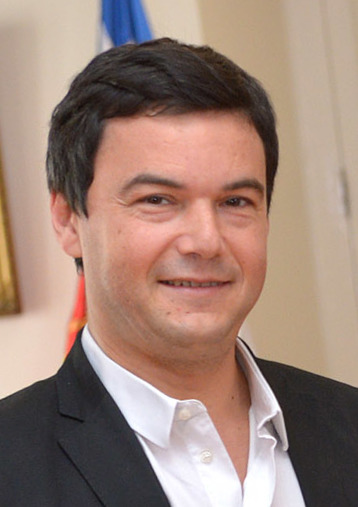
Thomas Piketty ist ein französischer Wirtschaftswissenschaftler. Er ist Professor an der École d’Économie de Paris und der École des Hautes Études en Sciences Sociales .
2014 sorgte seine Veröffentlichung Das Kapital im 21. Jahrhundert weltweit, besonders in den USA, für sehr große Aufmerksamkeit. Wikipedia
Thomas Piketty buch Capital in the Twenty-First Century
Quelle: Capital in the Twenty-First Century (2013), p. 43.
We must rethink globalization, or Trumpism will prevail (16 November 2016)
We must rethink globalization, or Trumpism will prevail (16 November 2016)
Thomas Piketty buch Capital in the Twenty-First Century
Quelle: Capital in the Twenty-First Century (2013), p. 377.
Thomas Piketty buch Capital in the Twenty-First Century
Quelle: Capital in the Twenty-First Century (2013), p. 1.
Thomas Piketty buch Capital in the Twenty-First Century
Quelle: Capital in the Twenty-First Century (2013), p. 46.
Piketty, Thomas, and Gabriel Zucman. Capital is back: Wealth-income ratios in rich countries, 1700-2010 http://piketty.pse.ens.fr/files/PikettyZucman2013WP.pdf. Centre for Economic Policy Research, 2013.
Thomas Piketty buch Capital in the Twenty-First Century
Quelle: Capital in the Twenty-First Century (2013), p. 32.
We must rethink globalization, or Trumpism will prevail (16 November 2016)
“The tragedy is that Trump’s program will only strengthen the trend towards inequality.”
We must rethink globalization, or Trumpism will prevail (16 November 2016)
We must rethink globalization, or Trumpism will prevail (16 November 2016)
Thomas Piketty buch Capital in the Twenty-First Century
Quelle: Capital in the Twenty-First Century (2013), p. 32.
We must rethink globalization, or Trumpism will prevail (16 November 2016)
Thomas Piketty buch Capital in the Twenty-First Century
Quelle: Capital in the Twenty-First Century (2013), p. 52.
We must rethink globalization, or Trumpism will prevail (16 November 2016)
Quoted in Chuck Collins, Nit-Picking Piketty http://inequality.org/nitpicking-piketty/ (2015). <br class="br">At ASSA http://events.mediasite.com/Mediasite/Play/b6d6725ea1df49c896fc82465f732e9b1d, 01:40:27.
Thomas Piketty buch Capital in the Twenty-First Century
Quelle: Capital in the Twenty-First Century (2013), p. 377; As cited in: " Thomas Piketty Capital in the twenty first century Part III http://robertpaulwolff.blogspot.nl/2014/03/thomas-piketty-capital-in-twenty-first_30.html" on robertpaulwolff.blogspot.nl, 2014/03.
Paul Krugman " The Piketty Panic http://www.nytimes.com/2014/04/25/opinion/krugman-the-piketty-panic.html" in nytimes.com, 2014/04/25; cited in: " Six Ways Thomas Piketty's 'Capital' Isn't Holding Up to Scrutiny http://www.forbes.com/sites/kylesmith/2014/05/01/six-ways-thomas-pikettys-capital-isnt-holding-up-to-scrutiny/" by Kyle Smith at forbes.com, 2014/04/25. <br class="br">About
“Broadly speaking, the rise of the supermanager is largely an Anglo-Saxon phenomenon.”
Thomas Piketty buch Capital in the Twenty-First Century
Quelle: Capital in the Twenty-First Century (2013), p. 315.
“Democracy will never be supplanted by a republic of experts - and that is a very good thing.”
Thomas Piketty buch Capital in the Twenty-First Century
Quelle: Capital in the Twenty-First Century (2013), p. 2.
Thomas Piketty buch Capital in the Twenty-First Century
Quelle: Capital in the Twenty-First Century (2013), p. 1 Introduction: Lead paragraph; Quoted in From the Introduction to Capital in the Twenty-First Century, by Thomas Piketty http://www.hup.harvard.edu/features/capital-in-the-twenty-first-century-introduction.html, at hup.harvard.edu, 2014.
Thomas Piketty buch Capital in the Twenty-First Century
Quelle: Capital in the Twenty-First Century (2013), p. 1.
Eduardo Porter, " Q&A: Thomas Piketty on the Wealth Divide http://economix.blogs.nytimes.com/2014/03/11/qa-thomas-piketty-on-the-wealth-divide/?_php=true&_type=blogs&_r=0," economix.blogs.nytimes.com, March 11, 2014. <br class="br">In answer of the question: "Your book fits oddly into the canon of contemporary economics. It focuses not on growth and its determinants, but on how the spoils of growth are divided. In that sense, it reminds us of similar concerns in a book of similar title written 150 years ago: Karl Marx’s “Capital.” What parallels would you draw between the two?"


.jpg)