Poul Anderson buch The Boat of a Million Years
Quelle: The Boat of a Million Years (1989), Chapter 7 “The Same Kind”, Section 2 (p. 140)
Poul Anderson war ein US-amerikanischer Science-Fiction-Autor im so genannten „goldenen Zeitalter“ der Science Fiction. Einige seiner Kurzgeschichten wurden zuerst unter den Pseudonymen A. A. Craig, Michael Karageorge und Winston P. Sanders veröffentlicht. Wikipedia
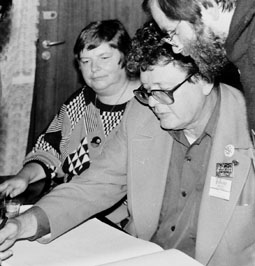
Poul Anderson buch The Boat of a Million Years
Quelle: The Boat of a Million Years (1989), Chapter 7 “The Same Kind”, Section 2 (p. 140)
Poul Anderson buch The Boat of a Million Years
Quelle: The Boat of a Million Years (1989), Chapter 5 “No Man Shuns His Doom”, Section 1 (p. 106)
“Nothing in excess, including self-denial.”
Poul Anderson buch The Boat of a Million Years
Quelle: The Boat of a Million Years (1989), Chapter 2 “The Peaches of Forever” (p. 29)
“What else is life but always bidding farewell?”
Poul Anderson buch The Boat of a Million Years
Quelle: The Boat of a Million Years (1989), Chapter 1 “Thule”, Section 8 (p. 21)
“Do you actually hope to convert the whole of mankind?”
Poul Anderson buch There Will Be Time
“Belay that! Anyhow, if you mean, Do we hope to make everybody into copies of us? The answer is, No. Mind, I’m not in Parliament or Admiralty, but I follow debates and I read the philosophers. One trouble with the old machine culture was that, by its nature, it did force people to become more and more alike. Not only did this fail in the end—disastrously—but to the extent it succeeded, it was a worse disaster.” Lohannaso smote the rail with a mighty fist. “Damnation, Thomas! We need all the diversity, all the assorted ways of living and looking and thinking, we can get!”
Quelle: There Will Be Time (1972), Chapter 11 (p. 119)
“Your son was in your own tradition.”
Poul Anderson buch The Enemy Stars
“Better, I hope,” said the old man. “There would be little sense to existence, did boys have no chance to be more than their fathers.”
Quelle: The Enemy Stars (1959), Chapter 18 (p. 150)
Journey’s End (p. 205)
Short fiction, The Book of Poul Anderson (1975)
Poul Anderson buch The Longest Voyage
The Longest Voyage (p. 171)
Short fiction, The Book of Poul Anderson (1975)
“Let’s stop making wild guesses and start gathering data.”
Epilogue (p. 122)
Short fiction, The Book of Poul Anderson (1975)
Patrick L. McGuire, Her Strong Enchantments Failing (p. 95)
Short fiction, The Book of Poul Anderson (1975)
Patrick L. McGuire, Her Strong Enchantments Failing (p. 94)
Short fiction, The Book of Poul Anderson (1975)
Patrick L. McGuire, Her Strong Enchantments Failing (p. 94)
Short fiction, The Book of Poul Anderson (1975)
Patrick L. McGuire, Her Strong Enchantments Failing (p. 93; this work is an essay about Anderson's story The Queen of Air and Darkness).
Short fiction, The Book of Poul Anderson (1975)
Poul Anderson buch The Queen of Air and Darkness
The Queen of Air and Darkness (p. 43)
Short fiction, The Book of Poul Anderson (1975)
“You were right. We should never have created science. It brought the twilight of the race.”
“I never said that. The race brought its own destruction, through misuse of science. Our culture was scientific anyway, in all except its psychological basis. It’s up to us to take that last and hardest step. If we do, the race may yet survive.”
Tomorrow's Children (p. 34)
Short fiction, The Book of Poul Anderson (1975)
Tomorrow's Children (p. 30)
Short fiction, The Book of Poul Anderson (1975)
Cold Victory, in Scithers & Schweitzer (eds.) Another Round at the Spaceport Bar, p. 181. Originally appeared in Venture Science Fiction https://en.wikipedia.org/wiki/Venture_Science_Fiction, May 1957 <br class="br">Short fiction
Cold Victory, in Scithers & Schweitzer (eds.) Another Round at the Spaceport Bar, p. 181. Originally appeared in Venture Science Fiction https://en.wikipedia.org/wiki/Venture_Science_Fiction, May 1957 <br class="br">Short fiction
Poul Anderson buch The People of the Wind
He drew breath. “Best beloved,” he said, “if communities didn’t resist encroachments, they’d soon be swallowed by the biggest and greediest. Wouldn’t they? In the end, dead sameness. No challenges, no inspirations from somebody else’s way. What service is it to life if we let that happen?
Chapter 19 (p. 175)
The People of the Wind (1973)
Poul Anderson buch The People of the Wind
Quelle: The People of the Wind (1973), Chapter 17 (p. 161)


